Want more customers but stuck with zero leads? Mastering lead generation can transform your business from invisible to irresistible—fast.

What Is Lead Generation and Why It Matters

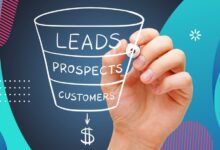
Lead generation is the strategic process of attracting and converting prospects into potential customers who have shown interest in your product or service. In today’s hyper-competitive digital landscape, simply having a great product isn’t enough. You need a steady flow of qualified leads to fuel sales and sustain growth.
The Core Definition of Lead Generation
At its heart, lead generation is about initiating consumer interest. It’s not just collecting names and emails—it’s about identifying individuals or businesses that fit your ideal customer profile and nurturing them through the buyer’s journey.
According to HubSpot, companies that prioritize lead generation see a 133% higher year-over-year growth in revenue compared to those that don’t. This makes lead generation not just a marketing tactic, but a business imperative. Source: HubSpot Lead Generation Statistics.
- It starts with awareness: making your brand visible to the right audience.
- Then moves to engagement: offering value in exchange for contact information.
- Finally transitions to qualification: determining if the lead is sales-ready.
“Lead generation is the lifeblood of any growing business. Without it, even the best products will go unnoticed.” — Neil Patel, Digital Marketing Expert
Types of Leads in the Funnel
Not all leads are created equal. Understanding the different types helps you tailor your approach and set realistic expectations for conversion.
- Marketing Qualified Leads (MQLs): These are leads who have engaged with your content—downloaded an eBook, attended a webinar, or subscribed to your newsletter—but aren’t yet ready to talk to sales.
- Sales Qualified Leads (SQLs): These leads have been vetted by the sales team and show clear intent to purchase, such as requesting a demo or pricing information.
- Product Qualified Leads (PQLs): Common in SaaS businesses, these users have experienced your product (e.g., via a free trial) and demonstrated behaviors indicating they’re ready to upgrade.
By segmenting your leads, you can apply targeted nurturing strategies that increase conversion rates and reduce customer acquisition costs.
Top 7 Lead Generation Strategies That Actually Work
With so many tactics floating around, it’s easy to get overwhelmed. But not all lead generation strategies deliver equal results. The following seven have been proven across industries and business models to generate high-quality leads consistently.
1. Content Marketing with High-Value Offers
Content is still king when it comes to lead generation. But not just any content—strategic, high-value content designed to solve real problems attracts the right kind of leads.
Create resources like whitepapers, guides, templates, and checklists that address specific pain points. For example, a financial advisor might offer a free retirement planning calculator in exchange for an email address.
- Focus on solving a problem, not selling.
- Use SEO-optimized titles and descriptions to attract organic traffic.
- Gate the content behind a simple form to capture lead data.
A study by Demand Gen Report found that 77% of B2B buyers consumed three to five pieces of content before engaging with a sales rep. This shows the power of content in building trust and warming up leads. Source: Demand Gen Report 2023.
2. Search Engine Optimization (SEO) for Organic Lead Capture
SEO remains one of the most cost-effective lead generation channels. Unlike paid ads, SEO builds long-term visibility and credibility.
Optimize your website and content for keywords your ideal customers are searching for. For example, a plumbing company might target “emergency plumber near me” or “how to fix a leaking faucet.”
- Focus on long-tail keywords with buyer intent (e.g., “best CRM for small business” vs. “CRM”).
- Optimize landing pages with clear calls-to-action (CTAs).
- Build backlinks from authoritative sites to boost domain authority.
Backlinko’s research shows that the #1 result on Google gets 27.6% of all clicks. Ranking higher means more visibility and more leads. Source: Backlinko CTR Study.
“SEO is not about gaming the system. It’s about creating the best possible experience for users—and that naturally attracts leads.” — Brian Dean, Founder of Backlinko
3. Paid Advertising (PPC & Social Ads)
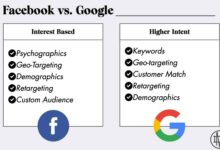
When you need fast results, paid advertising is one of the most scalable lead generation tools. Platforms like Google Ads and Facebook Ads allow precise targeting based on demographics, interests, and behavior.
For example, a fitness coach can run Facebook ads targeting women aged 30–45 interested in weight loss, directing them to a free 7-day meal plan in exchange for their email.
- Use A/B testing to optimize ad copy, images, and landing pages.
- Retarget website visitors who didn’t convert the first time.
- Track cost per lead (CPL) to ensure profitability.
According to WordStream, the average conversion rate for landing pages is 2.35%, but the top 25% convert at 5.31% or higher. This highlights the importance of optimizing your post-click experience. Source: WordStream Conversion Stats.
Lead Generation Tools and Technologies
Manual lead generation is inefficient and hard to scale. The right tools automate processes, improve accuracy, and help you convert more leads into customers.
CRM Systems for Lead Management
A Customer Relationship Management (CRM) system is essential for organizing, tracking, and nurturing leads. Tools like HubSpot CRM, Salesforce, and Zoho CRM allow you to store lead data, set follow-up tasks, and monitor engagement.
- Automate lead scoring based on behavior (e.g., email opens, page visits).
- Integrate with email marketing and social media platforms.
- Provide sales teams with real-time insights for better outreach.
Research by Nucleus Research shows that CRM systems deliver an average $8.70 return for every dollar spent. That’s a massive ROI for lead generation efficiency. Source: Nucleus Research.
Email Marketing Automation
Email remains one of the highest ROI channels for lead generation. Automation tools like Mailchimp, ActiveCampaign, and ConvertKit allow you to send personalized, behavior-triggered emails at scale.
For example, when someone downloads your guide, an automated sequence can send them a follow-up email with a case study, then a product demo offer—nurturing them toward a sale.
- Segment your list based on interests, behavior, or demographics.
- Use dynamic content to personalize messages.
- Track open rates, click-through rates, and conversions to refine campaigns.
The Data & Marketing Association reports that email marketing generates $42 for every $1 spent—making it one of the most powerful lead generation tools available. Source: DMA ROI Study.
Creating High-Converting Landing Pages
Your lead generation efforts are only as strong as your landing pages. A poorly designed page can kill even the best traffic source.
Essential Elements of a Winning Landing Page
A high-converting landing page removes distractions and focuses on one goal: getting the visitor to take action.
- Clear headline: Communicate the benefit immediately (e.g., “Get Your Free SEO Audit in 60 Seconds”).
- Compelling subheadline: Expand on the value proposition.
- Strong CTA: Use action-oriented language like “Download Now” or “Start My Free Trial.”
- Minimal form fields: Only ask for essential information (name and email often suffice).
- Social proof: Include testimonials, logos, or trust badges.
Unbounce reports that companies using A/B testing on landing pages see an average improvement of 37% in conversion rates. Testing is not optional—it’s essential. Source: Unbounce Conversion Benchmarks.
Avoiding Common Landing Page Mistakes
Even small errors can drastically reduce conversions. Here are the most common pitfalls:
Too many distractions: Navigation menus, external links, or unrelated content pull attention away from the CTA.Vague value proposition: If the visitor doesn’t instantly understand what they’ll get, they’ll leave.Slow load times: Pages that take longer than 3 seconds to load lose 40% of visitors.Not mobile-optimized: Over 60% of web traffic comes from mobile devices—your page must work flawlessly on all screens.”A landing page isn’t a homepage.It’s a focused sales pitch with one job: convert.” — Oli Gardner, Unbounce Co-FounderLead Nurturing: Turning Cold Leads into Paying CustomersOnly 2% of prospects are ready to buy immediately..
The rest need nurturing.Lead nurturing is the process of building relationships with prospects over time, guiding them toward a purchase decision..
The Role of Drip Campaigns
Drip campaigns are automated email sequences that deliver relevant content based on a lead’s behavior or timeline.
- Day 1: Welcome email with your free resource.
- Day 3: Share a customer success story.
- Day 7: Offer a consultation or demo.
MarketingSherpa found that nurtured leads make 47% larger purchases than non-nurtured leads. This shows that patience and consistency pay off. Source: MarketingSherpa Drip Campaign Study.
Personalization and Behavioral Triggers
Generic emails get ignored. Personalized messages based on user behavior dramatically increase engagement.
- Send a follow-up email if a lead downloads a pricing guide.
- Trigger a special offer if they visit your pricing page multiple times.
- Use their name, company, or past interactions to make the message feel tailored.
Experian reports that personalized subject lines increase open rates by 26%. Small touches create big impact. Source: Experian Personalization Data.
Measuring Lead Generation Success: Key Metrics to Track
If you’re not measuring, you’re not improving. Tracking the right metrics helps you understand what’s working and where to optimize.
Conversion Rate
This is the percentage of visitors who complete a desired action (e.g., fill out a form). A high conversion rate means your offer and landing page are effective.
Formula: (Number of Conversions / Total Visitors) × 100
Industry averages vary, but a 5–10% conversion rate is considered strong for most lead generation campaigns.
Cost Per Lead (CPL)
CPL tells you how much you’re spending to acquire each lead. This is crucial for budgeting and ROI analysis.
Formula: Total Campaign Spend / Number of Leads Generated
For example, if you spend $1,000 on Facebook ads and get 100 leads, your CPL is $10. Compare this to your customer lifetime value (LTV) to determine profitability.
Lead-to-Customer Conversion Rate
This metric measures how many leads actually become paying customers. A high lead volume means nothing if few convert.
Formula: (Number of Customers / Number of Leads) × 100
According to Salesforce, the average lead-to-customer conversion rate across industries is 14.6%. Improving this rate through better qualification and nurturing can double your sales without increasing traffic. Source: Salesforce State of Sales Report.
Common Lead Generation Mistakes to Avoid
Even experienced marketers make errors that sabotage their lead generation efforts. Recognizing these pitfalls can save you time, money, and frustration.
Targeting the Wrong Audience
Generating leads is pointless if they’re not the right fit. A common mistake is casting too wide a net.
Instead, create detailed buyer personas based on real data—demographics, pain points, goals, and online behavior. Use these to guide your messaging and targeting.
- Ask your sales team: Who are your easiest customers to close?
- Analyze your existing customer base for patterns.
- Use surveys and interviews to understand motivations.
Companies that use buyer personas see a 2x increase in marketing productivity, according to Cintell. Precision beats volume every time. Source: Cintell Persona Study.
Ignoring Lead Qualification
Not all leads should go straight to sales. Sending unqualified leads wastes your sales team’s time and damages customer experience.
Implement a lead scoring system that assigns points based on actions (e.g., +10 for downloading a pricing guide, +20 for attending a webinar). Only pass leads that meet a threshold to sales.
- Use demographic data (job title, company size) and behavioral data (pages visited, email engagement).
- Align marketing and sales on what defines a “qualified” lead.
- Regularly review and refine your scoring model.
“Better leads, not more leads, are the key to sustainable growth.” — Ardath Albee, Marketing Strategist
Future Trends in Lead Generation
The world of lead generation is evolving fast. Staying ahead of trends ensures your strategies remain effective and competitive.
AI-Powered Lead Generation
Artificial intelligence is transforming how we find and engage leads. AI tools can analyze vast amounts of data to predict which prospects are most likely to convert.
- Chatbots qualify leads 24/7 on your website.
- Predictive lead scoring uses machine learning to rank leads by likelihood to buy.
- AI-generated content personalizes emails and landing pages at scale.
Gartner predicts that by 2025, 80% of marketing interactions will be managed by AI. Early adopters will gain a significant edge. Source: Gartner AI Forecast.
Privacy-First Lead Generation
With increasing regulations (GDPR, CCPA) and the deprecation of third-party cookies, marketers must adapt to a privacy-first world.
The future lies in first-party data—information collected directly from your audience with consent.
- Offer value in exchange for data (e.g., exclusive content).
- Be transparent about how you use data.
- Build trust through ethical marketing practices.
According to Salesforce, 84% of customers say being treated like a person, not a number, is key to winning their business. Respect breeds loyalty. Source: Salesforce Connected Customer Report.
What is lead generation?
Lead generation is the process of attracting and converting strangers into potential customers by capturing their interest and contact information, typically through valuable offers, content, or interactions.
What are the best lead generation strategies?
The most effective strategies include content marketing with gated offers, SEO, paid advertising, email automation, and social media engagement—all supported by strong landing pages and CRM tools.
How do you generate high-quality leads?
Focus on targeting the right audience, offering real value, using lead scoring to qualify prospects, and nurturing them with personalized content until they’re ready to buy.
How much does lead generation cost?
Costs vary by channel. Organic methods like SEO and content marketing have low ongoing costs but require time. Paid ads can cost $10–$50 per lead, depending on industry and competition.
How do you measure lead generation success?
Track key metrics like conversion rate, cost per lead (CPL), lead-to-customer rate, and ROI. Use analytics tools to monitor performance and optimize campaigns.
Lead generation is not a one-time campaign—it’s a continuous process that fuels business growth. From creating high-value content to leveraging AI and automation, the strategies outlined here provide a roadmap for attracting, nurturing, and converting leads effectively. The key is consistency, measurement, and adaptation. By avoiding common mistakes and embracing future trends, you can build a lead generation engine that drives sustainable success.
Further Reading:
