Ever wondered what happens when lead turns from solid to liquid? The leads melting point is more than just a number—it’s a gateway to understanding material science, industrial safety, and environmental impact. Let’s dive into the fascinating world of lead’s phase transition.
Understanding the Leads Melting Point

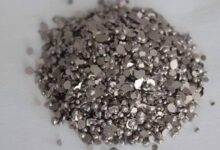
The leads melting point is a fundamental physical property that defines the temperature at which solid lead transforms into a liquid state. This critical threshold is precisely 327.5°C (621.5°F), though it is often rounded to 328°C or referenced as 343°C in industrial contexts due to impurities or measurement variations. This phase change is not just a scientific curiosity—it has real-world implications in manufacturing, recycling, and safety protocols.
What Is Melting Point?
The melting point of a substance is the temperature at which it changes from a solid to a liquid at atmospheric pressure. For pure elements like lead, this value is consistent and well-documented. The process involves breaking the metallic bonds that hold atoms in a rigid lattice structure, allowing them to flow freely in the liquid phase.
- Melting is an endothermic process (absorbs heat).
- It occurs at a specific temperature under standard pressure (1 atm).
- The melting and freezing points of a pure substance are identical.
“The melting point is a fingerprint of a material’s purity and structure.” — Materials Science Principle
Why the Leads Melting Point Matters
Knowing the exact leads melting point is crucial for industries that handle lead, such as battery manufacturing, construction, and metal recycling. It ensures process efficiency, worker safety, and product consistency. For example, in lead-acid battery production, molten lead is poured into grids, requiring precise temperature control just above the melting point.
- Prevents overheating, which can release toxic fumes.
- Optimizes energy use in smelting and casting.
- Ensures proper alloy formation when mixed with other metals.
Historical Context of Lead and Its Melting Behavior
Lead has been used by humans for over 9,000 years, with evidence of smelting dating back to 6400 BCE in Anatolia. Ancient civilizations, including the Romans, exploited the relatively low leads melting point to cast pipes, weights, and coins. This accessibility made lead one of the first metals widely used in engineering and construction.
Lead in Ancient Civilizations
The Romans, in particular, were prolific users of lead. They used it for aqueducts, plumbing (the word “plumbing” comes from the Latin *plumbum*, meaning lead), and even wine sweeteners. The low leads melting point allowed them to melt and shape it with simple furnaces fueled by wood or charcoal.
- Roman lead pipes were found across Europe and North Africa.
- Lead was used in cosmetics and medicines, despite early signs of toxicity.
- The ease of melting and casting made it ideal for mass production.
“The Romans loved lead because it was soft, corrosion-resistant, and easy to melt.” — Dr. Eleanor Hart, Archaeometallurgist
Industrial Revolution and Modern Use
During the 18th and 19th centuries, the demand for lead surged with the rise of industrialization. The leads melting point became a key parameter in steam engine components, soldering, and radiation shielding. The development of more accurate thermometers and furnaces allowed for better control of the melting process.
- Lead was used in type metal for printing presses.
- Soldering with lead-tin alloys became standard in electronics.
- Lead glass (crystal) production relied on controlled melting.
Scientific Principles Behind the Leads Melting Point
The leads melting point is governed by the laws of thermodynamics and the atomic structure of lead. As a post-transition metal, lead has a face-centered cubic (FCC) crystal structure, which influences how its atoms vibrate and break free during melting.
Atomic Structure and Bonding
Lead (Pb) has an atomic number of 82 and belongs to Group 14 of the periodic table. Its electrons are arranged in a way that results in relatively weak metallic bonding compared to transition metals. This weaker bond strength contributes to its low melting point relative to metals like iron (1538°C) or copper (1085°C).
- Lead atoms are large, with a high atomic radius.
- The delocalized electrons in the metallic bond are less tightly held.
- This allows the lattice to break down at lower temperatures.
For more on atomic properties, see the WebElements Lead Page.
Thermodynamics of Melting
Melting involves overcoming the enthalpy of fusion—the energy required to break the solid lattice. For lead, this value is approximately 4.77 kJ/mol. Once this energy is supplied, the atoms gain enough kinetic energy to move past one another, transitioning into a liquid.
- Heat is absorbed without a temperature rise during phase change.
- The process is reversible: cooling liquid lead below 327.5°C causes solidification.
- Impurities can lower or raise the effective melting point (freezing point depression/elevation).
Factors That Influence the Leads Melting Point
While the theoretical leads melting point for pure lead is 327.5°C, real-world conditions often alter this value. Impurities, pressure, and alloying elements can all shift the temperature at which lead melts.
Effect of Impurities
Even small amounts of contaminants like sulfur, arsenic, or antimony can change the melting behavior of lead. These impurities disrupt the uniform crystal lattice, often lowering the melting point through a phenomenon known as freezing point depression.
- Recycled lead often contains traces of other metals.
- Sulfur contamination forms lead sulfide, which has a higher melting point (1118°C).
- Purification processes like cupellation are used to restore purity.
“Impurities can make lead melt faster but compromise its structural integrity.” — Metallurgy Today Journal
Alloying and Eutectic Behavior
Lead is commonly alloyed with tin, antimony, or calcium to improve hardness or lower melting points. For example, a 63% tin–37% lead eutectic alloy melts at just 183°C, far below the leads melting point. This makes it ideal for soldering electronics without damaging components.
- Eutectic alloys have a sharp melting point, unlike non-eutectic mixtures.
- Lead-tin solders are being phased out due to RoHS regulations.
- Lead-calcium alloys are used in maintenance-free batteries.
Industrial Applications of the Leads Melting Point
The precise control of the leads melting point is essential in numerous industries. From battery production to radiation shielding, understanding when and how lead melts ensures safety, efficiency, and product quality.
Battery Manufacturing
Lead-acid batteries, used in cars and backup power systems, rely on grids made from lead or lead alloys. These grids are cast by pouring molten lead into molds, requiring temperatures just above the leads melting point (typically 350–400°C to ensure fluidity).
- Overheating can cause oxidation and dross formation.
- Temperature control ensures uniform grid thickness.
- Automated casting lines use sensors to monitor melt temperature.
Learn more about battery recycling at Battery University.
Recycling and Smelting
Over 80% of lead used today comes from recycling, primarily from spent batteries. The leads melting point is a key parameter in smelting furnaces, where lead is separated from plastic, sulfuric acid, and other materials.
- Rotary furnaces operate at 900–1200°C to handle impurities.
- Secondary smelters refine lead at temperatures just above 327.5°C.
- Energy efficiency is maximized by minimizing excess heat.
Safety and Environmental Considerations
While the leads melting point makes it easy to process, it also poses health and environmental risks. Lead vapor can form at temperatures above 500°C, and prolonged exposure to fumes can cause severe neurological damage.
Health Risks of Melting Lead
When lead is heated near or above its melting point, it can release toxic fumes. Inhalation of lead oxide particles can lead to lead poisoning, which affects the nervous system, kidneys, and reproductive organs.
- Symptoms include headaches, abdominal pain, and cognitive decline.
- Children are especially vulnerable to low-level exposure.
- OSHA sets permissible exposure limits (PEL) at 50 µg/m³ over 8 hours.
“There is no safe level of lead exposure.” — World Health Organization
Safety Protocols in Lead Handling
To mitigate risks, industries follow strict safety guidelines when melting lead. These include engineering controls, personal protective equipment (PPE), and air quality monitoring.
- Use of fume hoods and local exhaust ventilation.
- Mandatory respirators with P100 filters.
- Regular blood lead level testing for workers.
Measuring and Testing the Leads Melting Point
Accurate determination of the leads melting point is essential for quality control in metallurgy and materials science. Various laboratory and industrial methods are used to measure this property.
Differential Scanning Calorimetry (DSC)
DSC is a precise method for measuring phase transitions. A small sample of lead is heated at a controlled rate, and the heat flow is measured. The melting point appears as an endothermic peak on the graph.
- Highly accurate (±0.1°C).
- Requires only milligrams of material.
- Can detect impurities through peak broadening.
For technical details, visit AZoM on DSC.
Visual Observation Methods
In industrial settings, the melting point is often observed visually using a thermocouple and a transparent furnace. As the lead softens and collapses, the temperature is recorded.
- Simple and cost-effective.
- Less precise than DSC.
- Suitable for routine quality checks.
Leads Melting Point in Education and Research
The leads melting point is a common subject in chemistry and materials science labs. It serves as a practical example of phase transitions and thermal analysis.
Classroom Demonstrations
Many high school and university labs use lead to demonstrate melting and solidification. Due to safety concerns, these experiments are often conducted in fume hoods with strict supervision.
- Students record temperature vs. time to observe the plateau during melting.
- Graphs illustrate the concept of latent heat.
- Discussions include real-world applications and toxicity.
“Hands-on experiments with lead must prioritize safety over demonstration.” — National Science Teaching Association
Research on Lead Alternatives
Due to environmental and health concerns, researchers are actively seeking alternatives to lead in soldering, shielding, and batteries. These materials must have comparable melting points and physical properties.
- Bismuth-tin alloys are promising lead-free solders.
- Tin-silver-copper (SAC) alloys are RoHS-compliant.
- Research focuses on lowering melting points without toxic elements.
What is the exact leads melting point?
The exact leads melting point for pure lead is 327.5°C (621.5°F). This value can vary slightly due to impurities or measurement conditions.
Why is the leads melting point important in industry?
The leads melting point is crucial for processes like casting, soldering, and recycling. Knowing this temperature ensures efficient energy use, product quality, and worker safety.
Can lead melt at room temperature?
No, lead cannot melt at room temperature. It requires heating to at least 327.5°C to undergo phase change from solid to liquid.
Does alloying change the leads melting point?
Yes, alloying can significantly alter the leads melting point. For example, lead-tin eutectic alloys melt at 183°C, much lower than pure lead.
Is it safe to melt lead at home?
Melting lead at home is not recommended due to the risk of toxic fume exposure. Proper ventilation, PPE, and regulatory compliance are essential for safe handling.
Understanding the leads melting point is more than a scientific detail—it’s a cornerstone of industrial safety, material engineering, and environmental responsibility. From ancient plumbing to modern batteries, this property has shaped human technology for millennia. As we move toward safer alternatives, the knowledge of lead’s behavior remains vital for innovation and protection. Whether you’re a student, engineer, or hobbyist, respecting the power and peril of the leads melting point is essential.
Further Reading:
